



How far we’ve come…
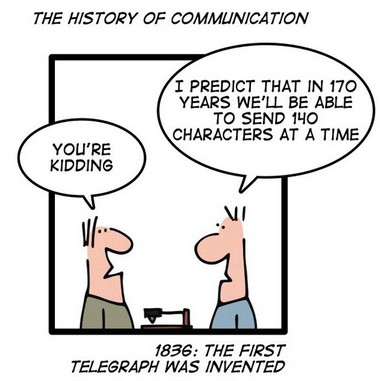
geekandpoke.typepad.com

I’ve just finished reading a book, The Design of Everyday Things (DOET) by Donald A. Norman. It’s a good book: I’m not a designer at all, but it turns out I can relate to what good design is, what bad decisions look like and why it’s important. As developers, we often have to make design decisions, and it’s therefore important that we know what the pitfalls are and how to avoid them in order to create better software, more usable software, software that’s a joy to use. That’s what I think anywhere. After all, there’s a precedent for success through good design… 😉
The book was written in 1988. That’s 24 years ago. It still amazes me how much things have changed in IT since then. As a comparison, consider the car industry.
Auto-Evolution
 I drive an X-reg van. At 12 years old, it’s certainly not the newest car on the road, but it’s not the oldest either. However, it looks, acts and to all functionality intents and purposes, IS equivalent. If it had been mothballed on its first day & you didn’t have the number plate, you would struggle to see the difference between it and its modern-day brothers.
Here’s a car from 1988. (I hope the owners don’t mind, but it’s for sale here if you want it!):

And here’s the modern-day equivalent:

There’s some style differences, and one has clearly had a bit more wax (and PhotoShop shine) than the other one, but essentially, it’s the same thing. It still requires someone to drive it, there’s still 3 pedals, it’s still the internal combustion engine from 1860-ish. We’re starting to see innovation in electric cars and hybrid cars, but, really, nothing has changed in the last 24 years.
Computing-Evolution
By way of comparison, I want to quote a paragraph from DOET, where the author first describes the concept of a hyperlink (see what I did there!) and then asks:
 So, what do you think of hypertext? Imagine trying to write something using it. The extra freedom also poses extra requirements. If hypertext really becomes available, especially in the fancy versions now being talked about – where words, sounds, video, computer graphics, simulations, and more are all available at the touch of the screen – well, it is hard to imagine anyone capable of preparing the material. It will take teams of people.
Even if you aren’t a developer, a designer, or connected with the process of creating webpages at all, you can see how dated that sounds. 24 years ago. It’s not a long time, but it’s a long time in IT. I think the reason it surprised me so much (enough to write this) is that all the real-world examples used in the book are still with us today, they haven’t yet moved on. Even the  “lean out the window” train doors are still being used. In this context, this paragraph stands out as testament to the sheer pace of innovation IT has enjoyed to date. Mind you, there’s still plenty of dodgy design out there which needs sorting out…